Yi Jing: Unlocking Yin & Yang
The Book of Changes Isn't Philosophy. It's the Physics of Chinese Medicine.
The Yi Jing predates the Nei Jing. It built the conceptual architecture underneath everything you practice. Most practitioners never read it. This course teaches you how — structurally, logically, and clinically — with Dr. Jason Ginsberg.
You Can Recite Yin‑Yang. You Don't Know Where It Came From.
Yin and Yang are the first concepts introduced in every acupuncture program. They're also the most superficially treated.
Most practitioners can define them. Very few can trace their logic — through hexagrams, trigrams, directional theory, and channel relationships — back to the source. That source is the Yi Jing.
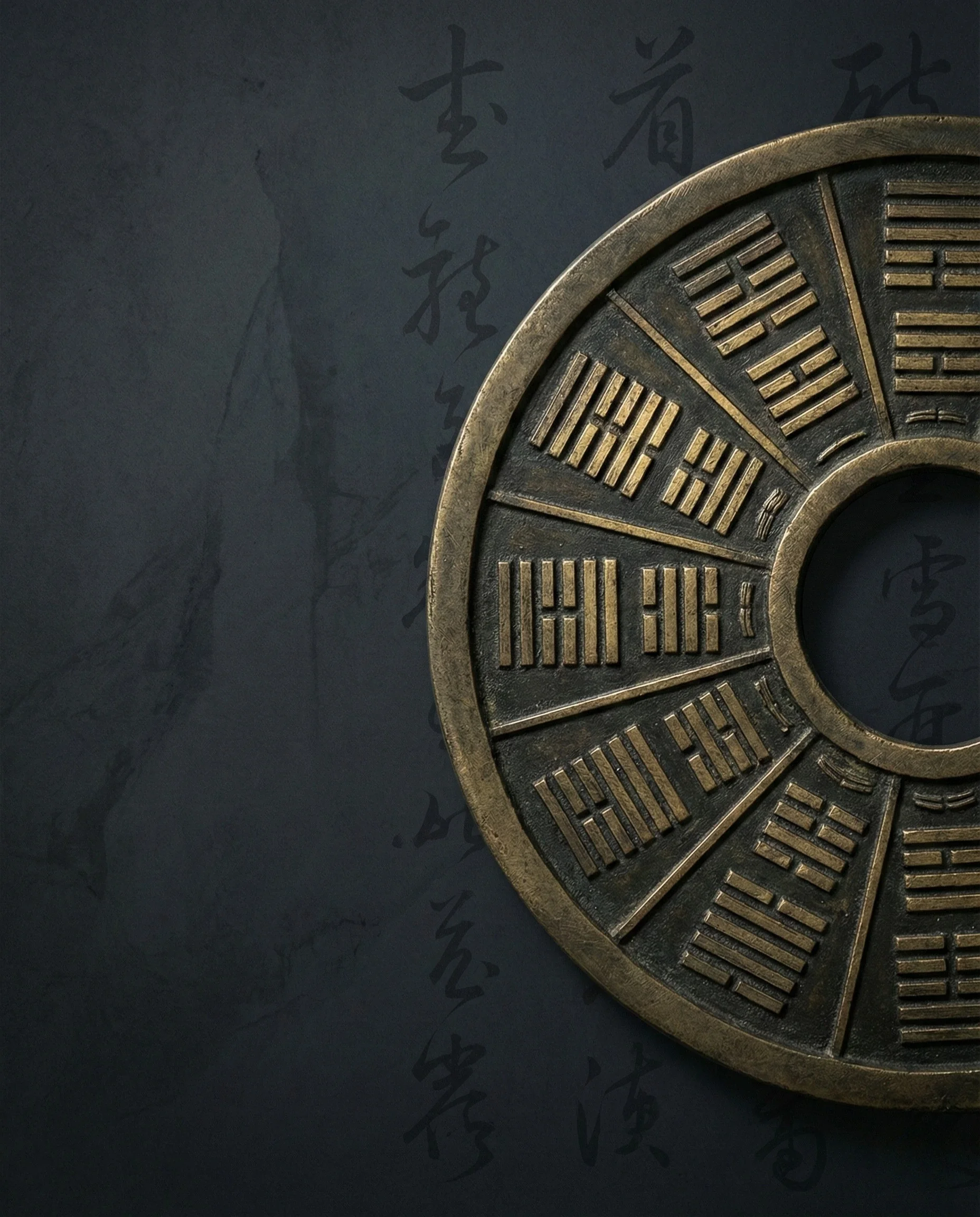
The Yi Jing predates the Nei Jing. It shaped the conceptual architecture of Chinese medicine before Chinese medicine had a name. The eight trigrams organize channel relationships. The generating and controlling cycles emerge from its diagram system. The diagnostic logic of yin-yang — at depth — lives here first.
Treating the Yi Jing as optional philosophy is a clinical liability. This course corrects that.
The He Tu underlies Five Phase generation. The Luo Shu governs the controlling cycle. The trigrams organize the Eight Extraordinary Vessels. This is not abstraction. This is the structure of the medicine.
— Dr. Jason Ginsberg
You Know the Theory
Yin, Yang, the Eight Principles, the Five Phases. You learned them in school. You use them daily — until a case doesn't respond and the framework runs out.
You Don't Know the Source
Why does Kidney anchor Liver? Why do the extraordinary vessels pair the way they do? The Yi Jing answers these questions — and makes your diagnostic reasoning structurally coherent.
This Course Fixes That
Six modules. Structural logic from cosmogony to channel mapping. Dr. Ginsberg translates the classical text into a working clinical framework — not philosophy for philosophy's sake.
Course Curriculum
Six modules. From cosmogonic structure to direct clinical application — built for licensed practitioners who want to think at the source level of Chinese medicine.
The classic defined — oracle, ethics, philosophy, cosmogony — and why each dimension matters clinically. What "yi" (change) means as a medical concept. The two major scholarly schools: yili (text & meaning) vs. xiangshu (image & number). How to approach the text rigorously, without mystifying it.
Yin-yang at depth: fundamentals, clinical simplification, and the limits of what school taught you. The Yi Jing as the formative context for all Chinese medical thought — especially diagnosis and prognosis. How the logic of change informs modeling, guidance, self-cultivation, and decisiveness under clinical pressure.
Hexagrams: Names, Judgment, Line Statements, and the Ten Wings commentary — how they integrate and what practitioners actually need. Line positions and relational logic between lines. Trigrams as clinical building blocks: form, image, number, family, body part, direction, and five phase correspondence.
He Tu (河圖): cosmogonic order of five phase yang and yin numbers and the generating cycle it produces. Luo Shu (洛書): the magic square, symmetry planes, and the controlling cycle. Fuxi Gua / Xian Tian (Before Heaven) arrangement and Shao Yong's progression. Wenwang / Hou Tian (After Heaven): directions, family groupings, and the theory of dynamic trigrams.
King Wen sequence: fangua, pangtong gua, nuclear trigrams, upper and lower canon — and their clinical implications. Shao Yong's circle and square of hexagrams. The three major transformation methods: Pangtong Gua (laterally linked), Fan Gua (overturned hexagrams), and Hu Ti (nuclear trigrams). Xiaoxi Gua / Bi Gua / Gua Qi.
Eight-plus-one direct clinical application methods. Eight principles mapped as trigrams and as single lines. 14-channel and 12-channel mapping, plus eight extraordinary vessel correlations. How to map and modify a diagnosis, point prescription, or formula. Yang sheng (nourishing life) and self-cultivation applications for the practitioner.
2.5 NCCAOM PDA Credits. On-demand access.
PDA approval pending. Enroll now — certificate issued upon confirmation.
This Course Is Built For
Practitioners Who Are Ready
Licensed Acupuncturists Who Feel Yin‑Yang Is Underused
Working Practitioner
You know the Eight Principles. You use yin-yang daily. But when a case doesn't respond, the framework runs out. This course gives you the structural source behind what you already practice — and makes your diagnostic reasoning coherent at a deeper level.
Licensed PractitionerPractitioners Moving Into Classical Systems Study
Classical Track
If you're studying channel theory, Five Phases, or extraordinary vessel diagnostics in depth, the Yi Jing is not supplemental — it's the source material. The He Tu generates the Five Phase cycle. The trigrams organize the extraordinary vessels. This course fills the gap no textbook covers.
Classical Systems StudentPractitioners Who Want Prognosis and Pattern Modeling Tools
Clinical Strategist
The Yi Jing is a decision-making framework — built for navigating complexity, modeling patterns of change, and making decisive clinical calls. Dr. Ginsberg applied this logic across five years of inpatient neurology at the Manhattan VA. This course translates that directly to your clinic.
Advanced ClinicianThis course assumes working familiarity with yin-yang, five phases, and channel theory. It is not introductory theory. If you are new to Chinese medicine, begin with Foundations of Chinese Medicine first — then return here. This course also requires clinical engagement: a brief assessment is required to earn PDA credit, because competence — not completion — is the standard.
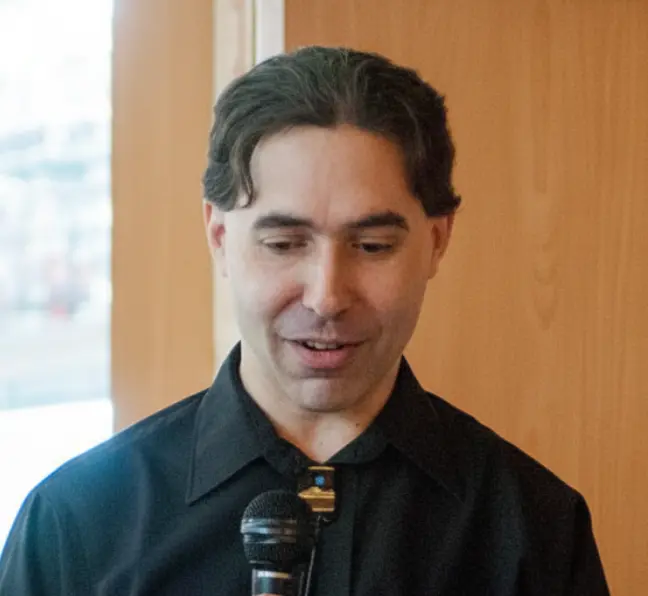
Dr. Jason Ginsberg
Neurology, Classics & Hospital MedicineDr. Ginsberg is one of the few practitioners in the United States who has worked at the intersection of classical Chinese scholarship and high-acuity hospital medicine. With five years in the neurology department at the Manhattan VA and two years in oncology and stroke rehabilitation at Lutheran Medical Center, his clinical experience is not theoretical — it was built under the pressure of complex inpatient cases where diagnosis and prognosis had to hold.
His approach to the Yi Jing reflects that same standard. Trained in East Asian Studies at NYU in 1996 and earning his doctorate in 2016, Dr. Ginsberg does not teach the classics as philosophy — he teaches them as the structural logic that makes the medicine coherent. His translation work draws directly from the Daodejing, Yijing, and Suwen, treating needle technique as an extension of internal body mechanics and classical reasoning.
Clinical FocusEverything You Need to Know Before You Enroll
| Credits | 2.5 PDA Points — Pending NCCAOM Approval |
| Format | On-demand video — watch at your own pace, any device |
| Access | Lifetime access upon purchase — no expiration |
| Assessment | Brief clinical quiz required to earn PDA credit — retake as needed until you pass |
| Certificate | Downloadable PDA certificate issued upon NCCAOM approval confirmation |
| Reporting | Completed credits reported promptly to the NCCAOM on your behalf |
| Provider | American Acupuncture Guild — NCCAOM Registered PDA Provider |
| Price | $50 — one-time purchase, no subscription required |
PDA credits are pending final NCCAOM approval. Most states accept NCCAOM PDA points toward license renewal — confirm jurisdiction-specific requirements with your state acupuncture board.
Enroll Today
Yi Jing: Unlocking Yin & Yang
Taught by Dr. Jason Ginsberg
no subscription
2.5 PDA Credits — Pending NCCAOM Approval
- On-demand video — lifetime access
- 2.5 NCCAOM PDA credits (pending approval)
- Clinical assessment quiz — retake until you pass
- Downloadable PDA certificate upon approval
- Credits reported to NCCAOM on your behalf
Instant access after purchase. Secure checkout.
NCCAOM Registered PDA Provider
More From the Guild Curriculum