Pain Management in Musculoskeletal and Other Pathologies
Stop Guessing. Learn the Channel Logic That Actually Moves Pain.
Most practitioners treat pain by chasing the symptom. They needle local, add a few points they memorized, and hope. This course teaches you why pain exists in Chinese medical terms — and gives you a systematic, channel-based framework to resolve it. From acute sprains to chronic structural damage, the logic is the same. Once you understand it, guesswork ends.
Enroll NowPain Is a Channel Problem. Treat It Like One.
Pain in Chinese medicine is not a diagnosis — it is a signal. 痛 (Tòng) exists wherever 通 (Tōng) — free flow — has been disrupted. Qi stagnation, blood stasis, sinew channel obstruction, external evil invasion: each has a distinct presentation, a distinct channel logic, and a distinct treatment pathway.
The problem is that most training collapses all of this into "needle where it hurts." Local treatment has its place — but as a final step, not a first resort. Without understanding the four channel pairing relationships, the distinction between acute and chronic pathology, and the role of the Qi Jing Ba Mai in chronic presentations, you are operating without a map.
This course gives you the map.
When I started in practice, I had no clinical framework for pain. I was an herbal practitioner in an acupuncture city — I had to build the system from scratch. What I found in the source texts was elegant, logical, and completely teachable. This course is that system.
— Mark Kuebel, L.Ac.You Needle Local
It works — sometimes. But when the patient doesn't respond, or the pain returns next session, you have no diagnostic framework to escalate. The treatment is complete, and so is your toolkit.
You Don't Know Why
Why does treating the opposite limb resolve unilateral pain? Why does the Tài Yáng zone dominate most musculoskeletal presentations? The Su Wen answers both. This course teaches you to use those answers clinically.
This Course Fixes That
Master the four channel pairing systems. Apply the distal-first treatment sequence. Understand when to transition from regular channels to the Qi Jing Ba Mai. These are the mechanics of every pain treatment you will do.
Course Curriculum
A clinical reference framework. You will finish this course with a working differential system for pain — from first presentation through complex chronic pathology — grounded in the source texts and immediately applicable.
The Chinese Medical Model of Pain
Tòng versus Tōng: the fundamental channel logic underlying all pain presentations. The four vital substances, their relationship to free flow, and what disruption of each produces clinically.
Acute vs. Chronic — Qi Stagnation vs. Blood Stasis
Diagnostic differentiation between Qi stagnation and blood stasis presentations. How to read the distinction clinically and how it dictates treatment strategy. The role of external evils in musculoskeletal injury.
Regular Channels vs. Qi Jing Ba Mai
The single most useful differentiator in pain management: acute presentations belong to the 12 regular channels; chronic and complex presentations lean toward the extraordinary vessels. When to apply each — and how to transition between them.
The Four Pairing Relationships of the 12 Regular Channels
Yin/Yin and Yang/Yang zone pairs; Yin/Yang and 6 Division pairs; 6 Division Yin-Yang; and the Three Circuits. All four systems applied to musculoskeletal pain with the most clinically productive channel combinations for each.
The Simple Treatment Protocol for Pain Management
Yuan/Source points move channel Qi. Xi/Cleft points move channel blood. The Su Wen rule of contralateral treatment. Set-up acupoints. The distal → semi-distal → local needling sequence and the most common clinical zones.
Complex and Chronic Pain Syndromes
When simple channel treatment is insufficient: suspecting the Qi Jing Ba Mai and Divergent Channels. Organ pains, structural stenosis, and Shang Qi presentations. How to think through cases that don't respond to the standard protocol.
2 NCCAOM PDA Credits. On-demand access.
Stop chasing symptoms. Master the channel logic.
This Course Is Built For Practitioners Who Are Ready to Stop Guessing
Practitioners Relying on Local Needling
You get results — inconsistently. When local treatment fails, you have no next move. This course closes that gap with a systematic, distal-first channel framework you can apply to any musculoskeletal presentation on any patient, first visit.
Licensed PractitionerStudents & New Graduates Entering Practice
Pain is your bread and butter when you hang a shingle. You will see it in your first week. Learn the channel pairing logic before you see your first patient — not after a year of trial and error. Build the right habits from the start.
Student / New GraduatePractitioners Expanding Diagnostic Depth
If you're already working with channel theory and classical diagnostics, this course fills the pain management gap. The four pairing systems integrate directly with Five Phase, Six Division, and extraordinary vessel work — without disrupting your existing clinical logic.
Advanced PractitionerYou are looking for a passive, box-checking CEU experience. This course requires clinical engagement. A brief assessment is required to earn your PDA credit — because competence, not completion, is the standard.
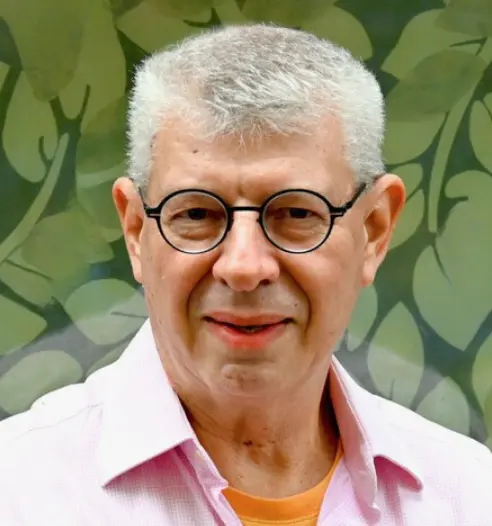
Senior Lecturer:
Classical Systems & Herbology
Mark Kuebel, L.Ac.
Mark Kuebel represents the intellectual spine of the Guild. With a background in biological sciences and decades of rigorous study in Classical Chinese Medicine, his approach to pain management is structural and physiological — not mystical.
His primary influences include Claude Larre, S.J., Elisabeth Rochat de la Vallée, and Dennis Willmont, L.Ac. Before entering clinical practice, he spent nine years consulting for an AIDS buyer's club — an experience that permanently grounded his work in patient-centered, outcome-driven thinking. He is currently writing a textbook on the foundational updates of Chinese medicine.
Mark's teaching mission is singular: strip away the modern simplifications, restore the potency of the original lineage, and give practitioners tools that hold up under clinical pressure.
Clinical Focus-
→
Master Tung Acupuncture: Teaching the internal logic of the system — moving beyond "magic points" into structural and physiological thinking.
-
→
Classical Translation: Updating the foundations of Chinese medicine by integrating new scholarship now available in English.
-
→
Herbal Medicine: Deep scholarship in formula architecture, modification, and the clinical application of classical texts.
Everything You Need to Know Before You Enroll
| Credits | 2 NCCAOM PDA Points — AOM-OM category |
| Format | On-demand video — watch at your own pace, any device |
| Access | Lifetime access upon purchase — no expiration |
| Assessment | Brief clinical quiz required to earn PDA credit — retake as needed until you pass |
| Certificate | Downloadable PDA certificate issued immediately upon passing |
| Reporting | Completed credits reported promptly to the NCCAOM on your behalf |
| Provider | American Acupuncture Guild — NCCAOM Registered PDA Provider |
| Price | $50 — one-time purchase, no subscription required |
Most states accept NCCAOM PDA points toward license renewal. We recommend confirming jurisdiction-specific requirements with your state acupuncture board.
Pain Management in Musculoskeletal and Other Pathologies
Taught by Mark Kuebel, L.Ac.
no subscription
- On-demand video — lifetime access
- 2 NCCAOM PDA credits (AOM-OM)
- Clinical assessment quiz — retake until you pass
- Downloadable PDA certificate
- Credits reported to NCCAOM on your behalf
More From the Guild Curriculum