Online CEU Course 2 NCCAOM PDA Credits
Introduction to Master Tung's Acupuncture
Stop Using Magic Points. Learn the System.
Most practitioners reduce the Master Tung system to a list of remarkable points. Líng Gǔ for back pain. Sān Zhòng for Bell's Palsy. It works — until it doesn't. And when it doesn't, you have no framework to fall back on. This course teaches you why the system works. Mark Kuebel, L.Ac. breaks down the six core correspondence relationships that govern every Tung point. Once you understand the logic, you stop memorizing and start thinking.
Enroll NowThe Problem
The Tung System Is More Than a Point List
The excitement around Master Tung is real. These points produce rapid, definitive results for conditions that standard TCM struggles with — and that reputation draws practitioners in. But most instruction stops at the map.
Mark Kuebel first encountered the Tung system in 1998. What he found wasn't a collection of extraordinary points — it was a complete structural logic rooted in channel correspondence, holographic needling, and the Gǎn Yìng (感應) — the resonance relationships that govern how the body self-organizes.
This course transfers that understanding directly to you.
Perfect point choices are not as important as getting the mirror imaging correct. But I've found that the better I understand the system, the more precisely I locate the point — and the better the results.
— Mark Kuebel, L.Ac.
You Know the Points
Líng Gǔ, Sān Zhòng, the Four Horses. They work — until they don't. Without the underlying logic, there is no next step.
You Don't Know Why
Why does needling the opposite hand resolve low back pain? Why does the thigh map to the chest? The six correspondence relationships answer both.
This Course Fixes That
Master the internal logic of the system. Apply it to any presentation — not just the cases you've seen before.
What You Will Learn
Course Curriculum
A clinical reference course. You will finish with a working framework for the entire Tung point system — the six relationship types, the Dào Mǎ groupings, and the most clinically productive points from fingers to thighs.
The Six Correspondence Relationships
Contralateral needling, distal same-channel, phase-to-phase, arm/leg cross-system, Yin/Yang pairs, and 24-hour clock pairings. The complete structural logic that makes Tung predictable — not magical.
History & Lineage of Tung Ching Chang
The family system, its transmission to Taiwan in 1949, the codification of 740+ points, and the lineage through Miriam Lee, Richard Tan, and Wei-Chieh Young. Context that sharpens clinical judgment.
Opposite-Side Needling: The Cornerstone
Miù (謬) and Jù (巨) Puncture from Su Wen Chapter 63. Why the contralateral side carries more available Qì — and how to exploit it systematically for faster, more decisive results.
Fingers & Hands: 11.xx and 22.xx Regions
Líng Gǔ, Dà Bái, Zhōng Bái Dào Mǎ for acute back pain and sciatica. Fire Knee, Wood Blazing, Finger Kidney. Indications, contraindications, and needling sequence.
Foot, Shin & Thigh: 66.xx–88.xx
Four Flowers, Fire Lotus, the Three Emperors (Tiān/Dì/Rén Huáng), the Four Horses, and Sān Zhòng Dào Mǎ. The most clinically productive point groups in the entire system.
Dào Mǎ Groupings & Needling Strategy
How 2- and 3-point lines amplify treatment effect. When to use groupings versus single points. How to combine Tung logic with classical channel theory without losing clinical coherence.
2 NCCAOM PDA Credits. On-demand access.
Learn the system once. Apply it for life.
Built For
This Course Is Built For Practitioners Who Are Ready
Licensed Acupuncturists Already Using Tung Points
You know Líng Gǔ works for back pain. You don't fully know why. When a patient doesn't respond, you have no next move. This course closes that gap and replaces memorization with a decision-making framework you can apply to any case.
Licensed PractitionerStudents & Recent Graduates Expanding Clinical Range
The Tung system is one of the highest-yield additions to a new practice. Learn it correctly from the start — structural logic intact — and it will serve you for the duration of your career. Don't build bad habits you'll have to unlearn.
Student / New GraduatePractitioners Deepening Classical Systems Study
If you're working through channel theory, five phases, or classical diagnostics in parallel, this course provides the integrative framework that places Tung within — not outside of — the broader classical tradition. The correspondence logic aligns directly with Su Wen source texts.
Classical Systems StudentYou are looking for a passive, box-checking CEU experience. This course requires clinical engagement. A brief assessment is required to earn your PDA credit — because competence, not completion, is the standard.
Your Instructor
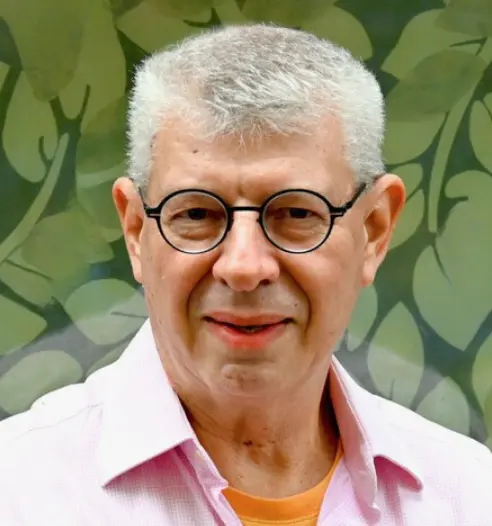
Senior Lecturer: Classical Systems & Herbology
Mark Kuebel, L.Ac.
Mark Kuebel represents the intellectual spine of the Guild. With a background in biological sciences and decades of rigorous study in Classical Chinese Medicine, his approach to the Tung system is structural and physiological — not mystical.
His primary influences include Claude Larre, S.J., Elisabeth Rochat de la Vallée, and Dennis Willmont, L.Ac. Before entering clinical practice, he spent nine years consulting for an AIDS buyer's club — an experience that permanently grounded his work in patient-centered, outcome-driven thinking. He is currently writing a textbook on the foundational updates of Chinese medicine.
Mark's teaching mission is singular: strip away the modern simplifications, restore the potency of the original lineage, and give practitioners tools that hold up under clinical pressure.
Clinical Focus
-
Master Tung Acupuncture: Teaching the internal logic of the system — moving beyond "magic points" into structural and physiological thinking.
-
Classical Translation: Updating the foundations of Chinese medicine by integrating new scholarship now available in English.
-
Herbal Medicine: Deep scholarship in formula architecture, modification, and the clinical application of classical texts.
Course Details
Everything You Need to Know Before You Enroll
Most states accept NCCAOM PDA points toward license renewal. We recommend confirming jurisdiction-specific requirements with your state acupuncture board.
Enroll Today
Introduction to Master Tung's Acupuncture
Taught by Mark Kuebel, L.Ac.
no subscription
2 NCCAOM PDA Credits Included
- On-demand video — lifetime access
- 2 NCCAOM PDA credits (AOM-OM)
- Clinical assessment quiz — retake until you pass
- Downloadable PDA certificate
- Credits reported to NCCAOM on your behalf
Instant access after purchase.
Secure checkout.
More From the Guild Curriculum