
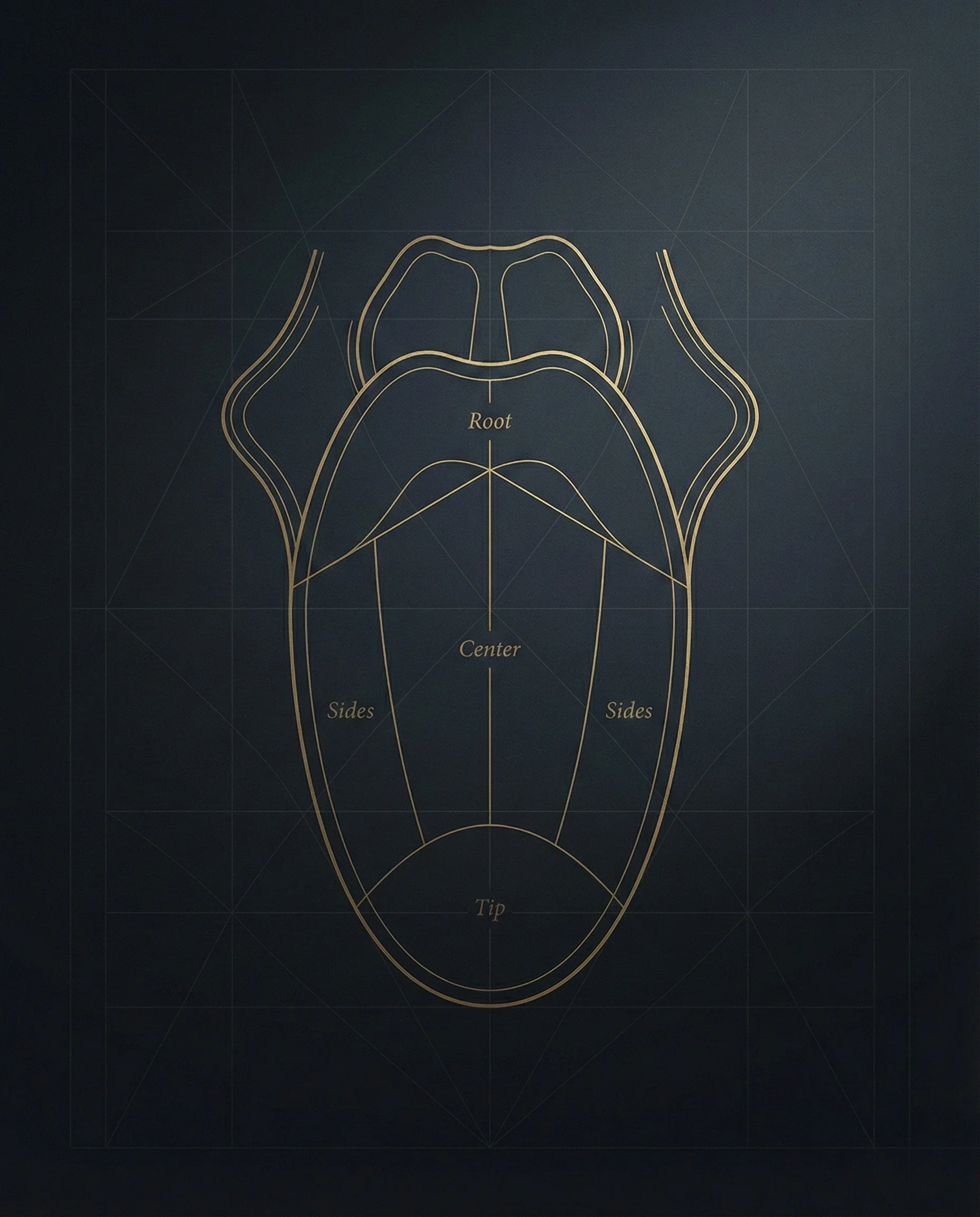
Read the Tongue.
Know the Patient.
Most practitioners treat tongue diagnosis as a checklist. Mark Kuebel teaches it as a window into the Heart's command of the entire being — a living map of the Zàng organs, fluid dynamics, and pathological depth that no intake form can replicate.
Enroll NowThe Complete System — From Classical
Foundation to Clinical Precision
This is not a survey course. Tongue Diagnosis with Mark Kuebel begins with the classical logic that makes the system coherent — the Heart as Emperor, the Xì conduit network connecting all five Zàng organs — and builds into a rigorous clinical methodology you can apply immediately.
The Classical Framework
Why the tongue is the Heart's orifice. How the Xì/system connects the Heart to each Zàng, making the tongue a direct mirror of interior organ function — not a metaphor, a mechanism.
Tongue Morphology: Shape, Size & Thickness
Thick vs. thin tongues, wide vs. narrow vs. constrained. What each morphology tells you about Yīn/Yáng balance, fluid transformation, and Spleen-Stomach function — and how to distinguish them accurately.
Organ Mapping by Region
The torso-tongue mirror image. Heaven, Human, and Earth zones. Identifying which Zàng is implicated based on where pathology appears — Heart and Lung in the upper, Spleen and Stomach in the middle, Kidney in the lower.
Surface Morphologies: Coatings, Cracks & Spots
A complete taxonomy: absent coating (Yīn emptiness), thin white through thick greasy (Damp transformation), central cracks vs. regional fissures vs. divots, flat papules vs. raised papules vs. hooked fever indicators — each with clinical significance.
Scallops, Crimping & Rails
Distinguishing Qì emptiness from Xuè stasis from Qì stagnation — the three most commonly confused tongue edge findings. Spleen, Liver, Lung, and Heart presentations mapped precisely.
Applied Clinical Integration
How to correlate tongue findings with pulse and intake. How to build a coherent diagnostic picture across the 3 Jiāo. When tongue leads the assessment — and when it defers to pulse.
This Course Is Built for Practitioners Who Are Done Guessing
If you can look at a tongue and identify a color or a coat — but you can't explain why the finding is there, which organ it implicates, or what it demands clinically — this course closes that gap.
Mark Kuebel's approach is not a simplified color chart. It is a systematic, classically grounded methodology rooted in the logic of how the Heart governs the interior. The difference between pattern recognition and diagnostic mastery is understanding the mechanism. That is what this course teaches.
- You're a licensed acupuncturist who relies on tongue color and coat but lacks confidence in morphological findings
- You studied TCM foundations and want the classical substrate that makes the system coherent
- You're preparing for clinical case complexity — patients whose presentations don't match the textbook
- You want a tongue methodology that integrates with pulse, intake, and herbal prescription
- You need 2 NCCAOM PDA points and want them to actually advance your clinical skills
Practitioners looking for a quick CEU box-check. This is clinical education. It demands attention and rewards it.
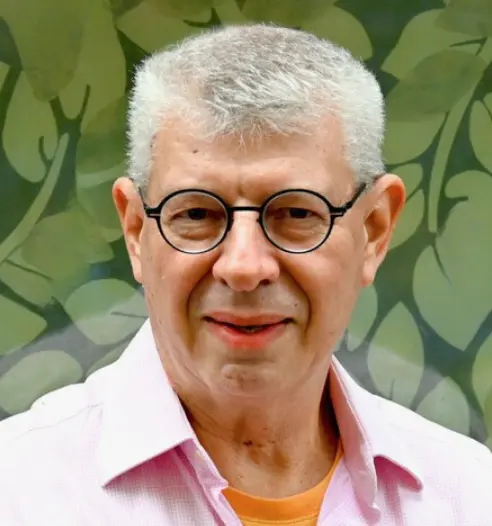
Mark Kuebel represents the intellectual spine of the Guild. With a background in biological sciences and decades of rigorous study in Classical Chinese Medicine, his approach to tongue diagnosis is rooted in the original classical texts — not the simplified TCM adaptations that stripped the system of its diagnostic depth.
Clinical Focus
- Master Tung Acupuncture: Teaching the internal logic of the system as an entry point into structural and physiological thinking, moving beyond "magic points."
- Classical Translation: Updating the foundations of Chinese medicine by integrating new information available in English.
- Herbal Medicine: Deep scholarship in formula architecture and modification.
Background & Lineage
Mark's primary influences include Claude Larre, S.J., Elisabeth Rochat de la Vallée, and Dennis Willmont, L.Ac. Prior to his clinical career, he spent 9 years consulting for an AIDS buyer's club — an experience that grounded his practice in patient-centered advocacy. He is currently writing a textbook on the foundational updates of Chinese medicine.
NCCAOM PDA-Approved Training
The American Acupuncture Guild is a registered NCCAOM Professional Development Activity provider. This course awards 2 PDA points upon successful completion of the clinical assessment. All credits are reported promptly to the NCCAOM on your behalf.
Instant Access
Receive your course link immediately after purchase. No waiting period, no scheduling required.
Clinical Assessment
Complete a brief quiz to verify your mastery of the material. Retake as many times as needed.
Instant Certification
Download your PDA certificate as soon as you pass. Credits reported to the NCCAOM on your behalf.
Clinical FAQ
Everything you need to know before enrolling. If your question isn't here, contact us at info@americanacupunctureguild.com
Is this course approved for NCCAOM license renewal?
Yes. This is a registered NCCAOM PDA-approved course. It awards 2 PDA points upon passing the post-course assessment. Most states accept NCCAOM PDA points — we recommend verifying your state board's specific requirements.
How long do I have access to the course?
Lifetime access. Once purchased, the course is yours. Watch it at your own pace, revisit it before complex cases, or use it as a clinical reference. No expiration.
What if I don't pass the quiz?
You may retake the assessment as many times as needed until you pass. Our goal is clinical competence, not gatekeeping.
What level of practitioner is this course designed for?
This course is appropriate for licensed acupuncturists at any stage of practice. It is also suitable for advanced students in their final clinical year. The material bridges classical foundations and applied clinical skill — it rewards both newer practitioners building their framework and experienced clinicians who want to close diagnostic gaps.
How does this course differ from what I learned in school?
Most school-level tongue training emphasizes memorization of color and coat categories. This course teaches the classical mechanism — the Heart's governance of the Zàng through the Xì conduit system — that makes those categories clinically meaningful. You will leave with a system, not a checklist.
Is this course taught live or recorded?
This is an on-demand recorded seminar. You access it immediately after purchase and learn on your own schedule. No live session required, no scheduling conflicts.
Stop Looking at the Tongue.
Start Reading It.
Tongue diagnosis is one of the four pillars of classical assessment. When you understand the mechanism behind the findings — not just the categories — it becomes one of the most powerful tools in your clinical arsenal. Two PDA points. Lifetime access. Immediate delivery.
Enroll Now $50 · 2 NCCAOM PDA Points · On-Demand Access