
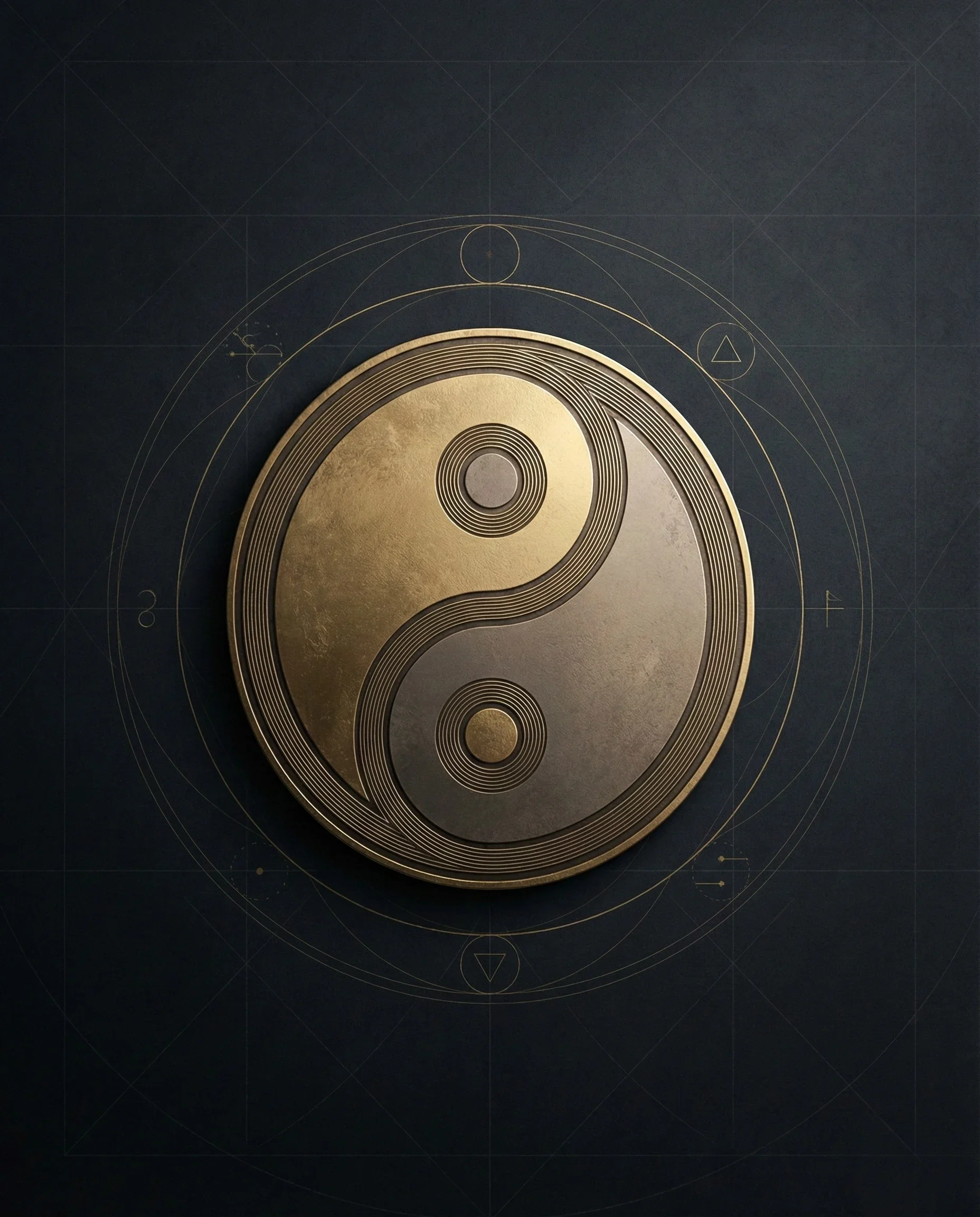
Five Phases as Yin and Yang
Two Ideas. One Framework.
You were taught Yin/Yang in year one. You were taught the Five Phases shortly after. Then clinical training started — and both got buried under points, herbs, and combinations. This course puts them back. Not as two separate theories to manage, but as a single, unified model of how the body moves through time. Once you understand the relationship, the Five Phases stop being a system you memorize and start being a system you see.
The Five Phases Are Not a List to Memorize
Most practitioners can tell you that Liver Yin rising is associated with Wind, that the Kidney governs the bones, that Metal corresponds to the Lung and Large Intestine. They know this because they memorized it. But ask them why — ask what structural logic connects the Kidney to Water, or why Metal comes after Fire and not before Wood — and the answer falls apart.
This isn't a failure of intelligence. It's a failure of instruction. The Five Phases and Yin/Yang are typically presented as separate topics in separate semesters, and by the time clinical training begins, neither has been deeply integrated. The result is a practitioner who can recognize patterns but can't reason through unfamiliar ones.
Dr. Caron's approach is different: the Five Phases aren't a separate system. They are what Yin and Yang looks like when you add the dimension of time. Generate one from the other — once — and you never have to memorize the sequence again.
Yin and Yang, plus time — that's it. Once you draw the sine wave, the Five Phases fall out of it naturally. The chart isn't something you memorize. It's something you derive.— Dr. Peter Caron, DACM
Wood, Fire, Earth, Metal, Water. You know the sequence. You don't fully know why it goes that way — which means you can't apply it under clinical pressure.
Why does the descending phase produce Metal? Why is Earth the pivot and not a phase like the others? The answers are in the Yin/Yang sine wave — and they make the whole system coherent.
Build the Five Phases from the ground up using the Yin/Yang sine wave model. Derive the system yourself once, and the clinical logic becomes self-evident.
Course Curriculum
A conceptual course. By the end, you will have rebuilt the Five Phases from first principles — and you'll have a diagnostic lens you can apply to any patient presentation.
Yin and Yang as a Dynamic System
Back to basics — but deeper. Yin as storage, Yang as action, and the cycle they form. The foundational mechanics that make the Five Phases possible.
The Sine Wave Model: Yin/Yang + Time
Add the dimension of time to the Yin/Yang oscillation and a sine wave emerges. The peaks, troughs, and inflection points of that wave are the Five Phases — not memorized, derived.
The Four Quadrants: Yang within Yang, Yin within Yang, Yin within Yin, Yang within Yin
The internal structure of the wave. Each quadrant describes a direction of movement — rising, peaking, descending, bottoming — mapping directly to Wood, Fire, Metal, and Water.
Earth as the Pivot, Not the Phase
Earth doesn't fit neatly into the sine wave because it isn't a phase of movement — it's the transition between phases. Understanding its structural role resolves one of the most clinically misunderstood elements in the system.
Reading the Patient Through the Five Phases Lens
Where in the cycle is this patient stuck? Which phase is overdeveloped, which is absent, where is the movement arrested? A framework for asking better diagnostic questions at every intake.
Cyclical Diagnosis Across the Lifespan
The Five Phases don't just describe physiology — they describe how a person moves through time. Using the unified model to understand a patient's full arc and help them complete the cycles they're stuck in.
Learn the system once. Apply it for life.
This Course Is Built For Practitioners Who Are Ready to Think, Not Memorize
Students and Recent Graduates Who Felt Like the Foundations Disappeared
You learned Yin/Yang in year one and the Five Phases shortly after. Then clinical training started and both got buried. This course reactivates that foundation — not at the level you first encountered it, but at the level you're operating now.
Student / New GraduateLicensed Practitioners Who Use Five Phase Diagnosis Without Full Confidence
You can identify Five Phase patterns. You've used them clinically. But when a patient presentation doesn't fit the textbook picture, you're guessing. This course gives you the structural logic that makes the system generative — not just recognizable.
Licensed PractitionerTheory Students Who Want the Model to Match the Mechanics
If you've felt that the Five Phases and Yin/Yang theory should connect more deeply than your coursework showed — they do. This course makes that connection explicit and rebuilds the system from first principles.
Classical Theory StudentYou are looking for a passive, box-checking CEU experience. This course requires you to sit with concepts, follow an argument, and rebuild a model from the ground up. A brief clinical assessment is required to earn PDA credit.
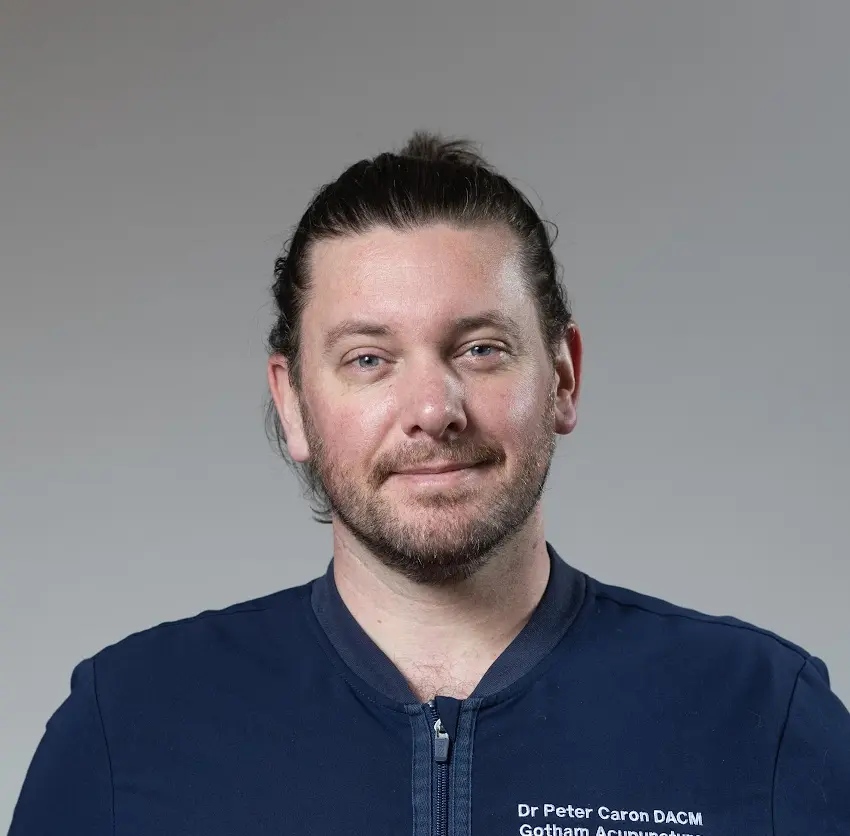
Dr. Peter Caron, DACM
Founder: Orthopedics & Practice StrategyDr. Caron founded AAG to enable senior practitioners to easily and effectively share their wisdom with the next generation. His career has been defined by a refusal to accept the soft standards of the wellness industry. From the high-volume clinics of rural Guatemala to the competitive landscape of New York City, his focus is singular: does it work?
With over 20,000 patient treatments performed globally, Dr. Caron represents the intersection of high-volume clinical reality and deep lineage. His teaching mission is to give practitioners tools that hold up under clinical pressure — not frameworks that only work on textbook presentations.
Clinical FocusEverything You Need to Know Before You Enroll
| Credits | 2 NCCAOM PDA Points — AOM-OM category |
| Format | On-demand video — watch at your own pace, any device |
| Access | Lifetime access upon purchase — no expiration |
| Assessment | Brief clinical quiz required to earn PDA credit — retake as needed until you pass |
| Certificate | Downloadable PDA certificate issued immediately upon passing |
| Reporting | Completed credits reported promptly to the NCCAOM on your behalf |
| Provider | American Acupuncture Guild — NCCAOM Registered PDA Provider |
| Price | $50 — one-time purchase, no subscription required |
Most states accept NCCAOM PDA points toward license renewal. We recommend confirming jurisdiction-specific requirements with your state acupuncture board.
Five Phases as Yin and Yang
Taught by Dr. Peter Caron, DACM
- On-demand video — lifetime access
- 2 NCCAOM PDA credits (AOM-OM)
- Clinical assessment quiz — retake until you pass
- Downloadable PDA certificate
- Credits reported to NCCAOM on your behalf
Instant access after purchase.
Secure checkout.
NCCAOM RegisteredPDA Provider
NCCAOM PDA-Approved Training
The American Acupuncture Guild is a registered provider of continuing education. Every course in our national curriculum is designed to meet the rigorous standards of the NCCAOM. We don't just help you renew your license — we help you build a practice worth renewing it for.
Clinical FAQ
Does this course replace foundational Five Phase coursework?
No — it assumes you've already been introduced to both Yin/Yang and the Five Phases. This course deepens and integrates what you already know. Most students find it most useful after at least one year of clinical exposure.
Is this course approved in my state?
Most states accept NCCAOM PDA points toward license renewal. We recommend checking with your specific state acupuncture board for jurisdiction-specific requirements.
How long do I have to complete the course?
You have unlimited, lifetime access to your purchased course. Watch at your own pace, on any device, with no expiration date.
What if I fail the clinical assessment?
Our goal is clinical competence, not completion. You may retake the assessment as many times as needed until you pass.
Stop Managing Two Separate Systems. Learn to Generate One.
Most practitioners carry Yin/Yang and the Five Phases as two separate mental frameworks for the rest of their careers. This course collapses them into a single model — one you derive from first principles and can apply to any patient, any presentation, any phase of life.
$50 · 2 NCCAOM PDA Credits · Instant access after purchase