
Transport Acupoints of the 12 Regular Channels
Jing-Well. Ying-Spring. Shu-Stream. Jing-River. He-Sea. Every licensed acupuncturist knows this sequence. It appears on every board exam, in every clinic protocol, and in the hands of every practitioner who reaches for LI-4, ST-36, or LU-7 without fully understanding why. This course rebuilds that understanding from the classical source texts up. Mark Kuebel, L.Ac. walks through the internal logic of the complete transport acupoint system — the Five Shu points and the secondary transport points (Source, Cleft, and Lo-Connecting) — using the Nanjing, the Ling Shu, and thirty years of clinical reasoning to give you a framework that works across every presentation you'll ever see.
You Were Taught Indications. You Were Never Taught the System.
The Five Transport Points are the most used and most effective acupoints in the entire channel system. These points sit where the channel is most exposed to the environment — where the body senses and exchanges with the world around it. Arms sensing Heavenly Qi from above. Legs sensing Earth Qi rising from below. That physiological reality is why these points work — and why needling them distal produces stronger results than needling the torso.
But that reasoning was never taught. What was taught instead: Jing-Well for fullness below the heart. He-Sea for counterflow Qi and diarrhea. Ying-Spring for clearing heat. These are indications, not functions — and there is a difference. When you know the function, you can treat what's in front of you. When you only know the indication, you can only treat what you've seen before.
This course corrects that. It covers the full transport acupoint system: the Five Shu points and the three secondary transport points — Source (Yuán), Cleft (Xī), and Lo-Connecting (Luò) — each with the classical reasoning that makes them reliable instead of situational.
"The transport acupoints exist because the body needs to sense the environment. That's their physiological origin. The brilliance of ancient Chinese medicine was figuring out you could also stimulate them — and get a response in the interior."— Mark Kuebel, L.Ac.
You needle LU-7 for colds. ST-36 for Qi deficiency. LI-4 and LV-3 together. They work — until you need to explain exactly why, or adapt when they don't.
Why do Ying-Spring points clear all six external evils — not just heat? Why is the Jing-River point's name the same character used in the Daodejing and Nanjing? The classical logic answers both. Most training never reaches it.
Learn the function of every transport acupoint type — Five Shu plus Source, Cleft, and Lo — so you can reason through any presentation instead of matching symptoms to a list.
Course Curriculum
A clinical reference course built around the complete transport acupoint system. You finish with a working command of all eight point types, their classical source reasoning, five-phase correspondences, and a decision-making framework you can apply immediately in the clinic.
Chapters 64–68 of the Nanjing and the corresponding Ling Shu passages — read as practitioners, not philologists. What the classics actually say about transport point location, order, and function. Why the Five Shu exist only on the 12 Regular Channels, and what that tells you about how they work.
Transport acupoints are harmonic points — positioned where the body senses and exchanges with its environment before the channel plunges into the interior. Arms sense Heavenly Qi. Legs sense Earth Qi. This model — Gǎn Yìng (感應) — explains the distal point's clinical power and the directional logic of the entire system.
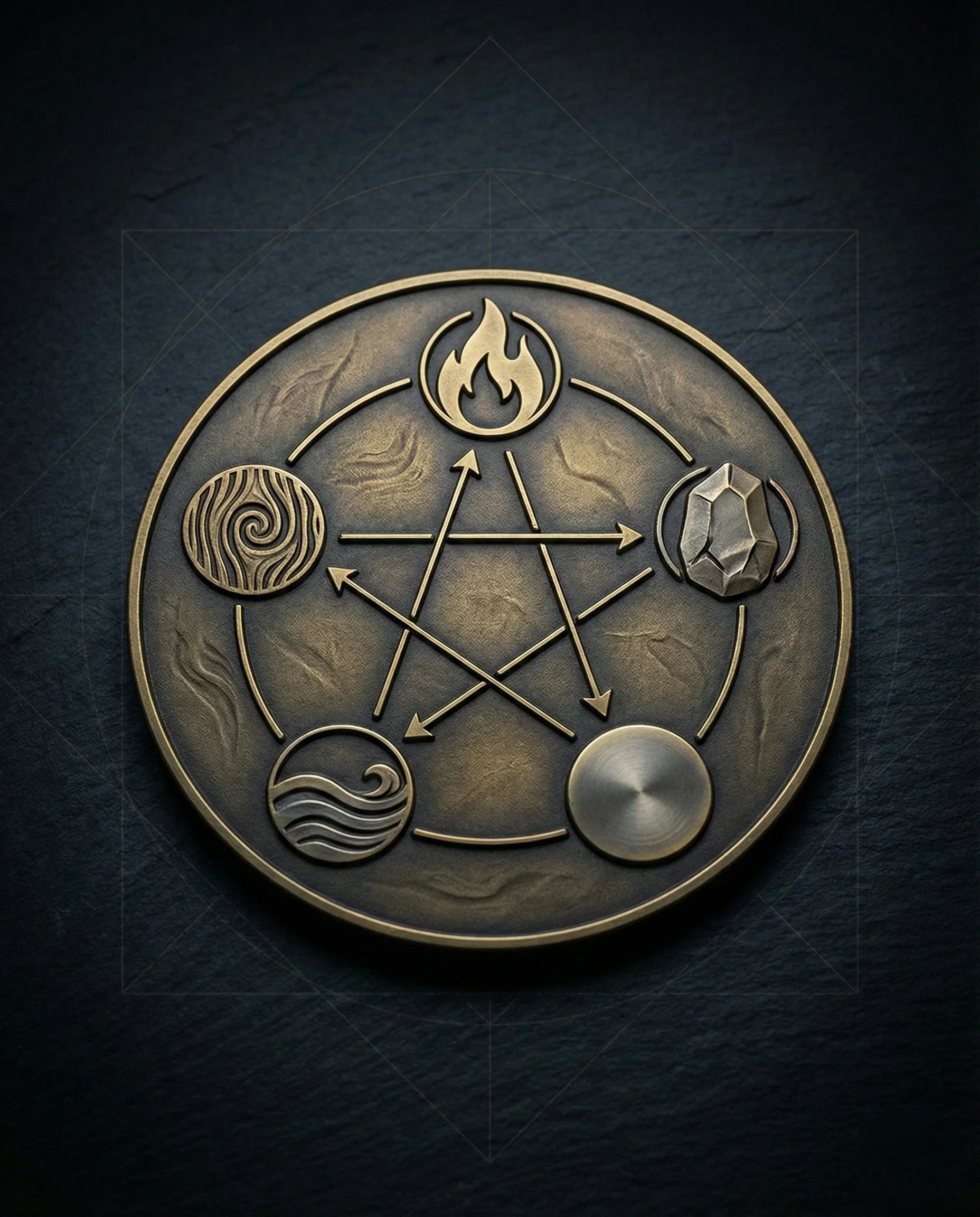
Yin channel Well points begin with Wood. Yang channel Well points begin with Metal. Both sequences follow the sheng (generating) cycle. Using SP-5 to move Earth energy into Metal for Lung Qi deficiency; using HT-7 to guide excess heat downward. These are not abstractions — they are point selection decisions.
Jing-Well: quick surface clearing, opens the sinew channel. Ying-Spring: clears all six external evils — not just heat. Shu-Stream: promotes channel flow, clears damp from joints. Jing-River: keeps the channel open and standardized. He-Sea: enters the organ level, unites with the interior, clears damp using the law of similars.
Source (Yuán): "If you have disease, pierce the Source" — Nanjing Ch. 66. Why LI-4 and LV-3 work together. Cleft (Xī): moves blood in the channel — its primary function, not just for emergencies. Lo-Connecting (Luò): works on the zone, not just the channel itself. Five types, one point.
Combining Five Shu with Source, Cleft, and Lo across channel circuits (Tài Yīn, Yáng Míng, Jué Yīn, Shào Yáng). Why yin channel source points equal their stream points — and the clinical implications. Seasonal depth considerations from the Ling Shu. How to substitute when your target point is inaccessible.
2 NCCAOM PDA Credits. On-demand access.
Learn the system once. Apply it for life.
This Course Is Built For
Practitioners Who Are Ready
Licensed Acupuncturists Who Use These Points Without the Underlying Logic
You needle LU-7 for every cold. You know LI-4 and LV-3 work together. You use ST-36 reflexively. What you don't have is the reasoning that tells you when to adjust, substitute, or combine — and why. This course replaces habit with a clinical framework that holds up under pressure.
Licensed PractitionerStudents and Recent Graduates Building Clinical Foundations
The transport acupoint system is the most clinically productive structure in Chinese medicine. Learn it correctly at the start of your career — with the Five Shu, Source, Cleft, and Lo-Connecting understood as a complete system — and you'll have a decision-making framework that serves every patient you'll ever treat.
Student / New GraduateClassical Study Practitioners Bridging Text and Clinic
If you're working through the Nanjing or Ling Shu and struggling to connect theory to treatment decisions, this course provides the translation layer. Mark reads these passages as a practitioner — every chapter becomes a set of clinical instructions, not historical scholarship.
Classical Studies PractitionerYou are looking for a point indications list. This course requires engagement with classical source material and clinical reasoning. A brief assessment is required to earn PDA credit — because competence, not completion, is the standard.
Senior Lecturer:
Classical Systems & Herbology
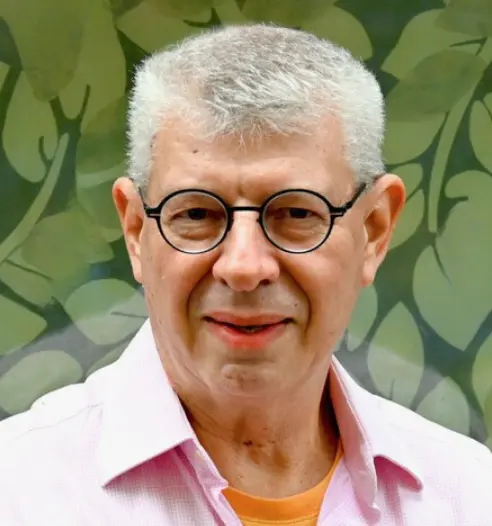
Mark Kuebel, L.Ac.
Mark Kuebel represents the intellectual spine of the Guild. With a background in biological sciences and decades of rigorous study in Classical Chinese Medicine, his approach to pain management is structural and physiological — not mystical.
His primary influences include Claude Larre, S.J., Elisabeth Rochat de la Vallée, and Dennis Willmont, L.Ac. Before entering clinical practice, he spent nine years consulting for an AIDS buyer's club — an experience that permanently grounded his work in patient-centered, outcome-driven thinking. He is currently writing a textbook on the foundational updates of Chinese medicine.
Mark's teaching mission is singular: strip away the modern simplifications, restore the potency of the original lineage, and give practitioners tools that hold up under clinical pressure.
Clinical Focus-
→
Master Tung Acupuncture: Teaching the internal logic of the system — moving beyond "magic points" into structural and physiological thinking.
-
→
Classical Translation: Updating the foundations of Chinese medicine by integrating new scholarship now available in English.
-
→
Herbal Medicine: Deep scholarship in formula architecture, modification, and the clinical application of classical texts.
Everything You Need to Know
Before You Enroll
| Credits | 2 NCCAOM PDA Points — AOM-OM category |
| Format | On-demand video — watch at your own pace, any device |
| Access | Lifetime access upon purchase — no expiration |
| Assessment | Brief clinical quiz required to earn PDA credit — retake as needed until you pass |
| Certificate | Downloadable PDA certificate issued immediately upon passing |
| Reporting | Completed credits reported promptly to the NCCAOM on your behalf |
| Provider | American Acupuncture Guild — NCCAOM Registered PDA Provider |
| Price | $50 — one-time purchase, no subscription required |
Most states accept NCCAOM PDA points toward license renewal. We recommend confirming jurisdiction-specific requirements with your state acupuncture board.
Transport Acupoints of the 12 Regular Channels
Taught by Mark Kuebel, L.Ac.
no subscription
- On-demand video — lifetime access
- 2 NCCAOM PDA credits (AOM-OM)
- Clinical assessment quiz — retake until you pass
- Downloadable PDA certificate
- Credits reported to NCCAOM on your behalf
Instant access after purchase. Secure checkout.
More From the Guild Curriculum
Mark Kuebel, L.Ac.
Introduction to Master Tung's Acupuncture
The internal logic of the Tung system — six correspondence relationships, Dào Mǎ groupings, and the most clinically productive points from fingers to thighs.
Mark Kuebel, L.Ac.
Five Phases & Chinese Medicine
Integration of the 5 Zang, 6 Fu, and Channel System. The dynamic model that generates physiological diagnosis — essential for every classical system you'll study.
Mark Kuebel, L.Ac.
Pain Management Protocols
A rigorous channel-based approach to structural pain. Stop relying on clinical guesswork — master the systematic framework for consistent, replicable results.