
Online CEU Course · 2 NCCAOM PDA Credits
Introduction to
Dietary Therapy
Your Patients Eat Three Times a Day. Prescribe Accordingly.
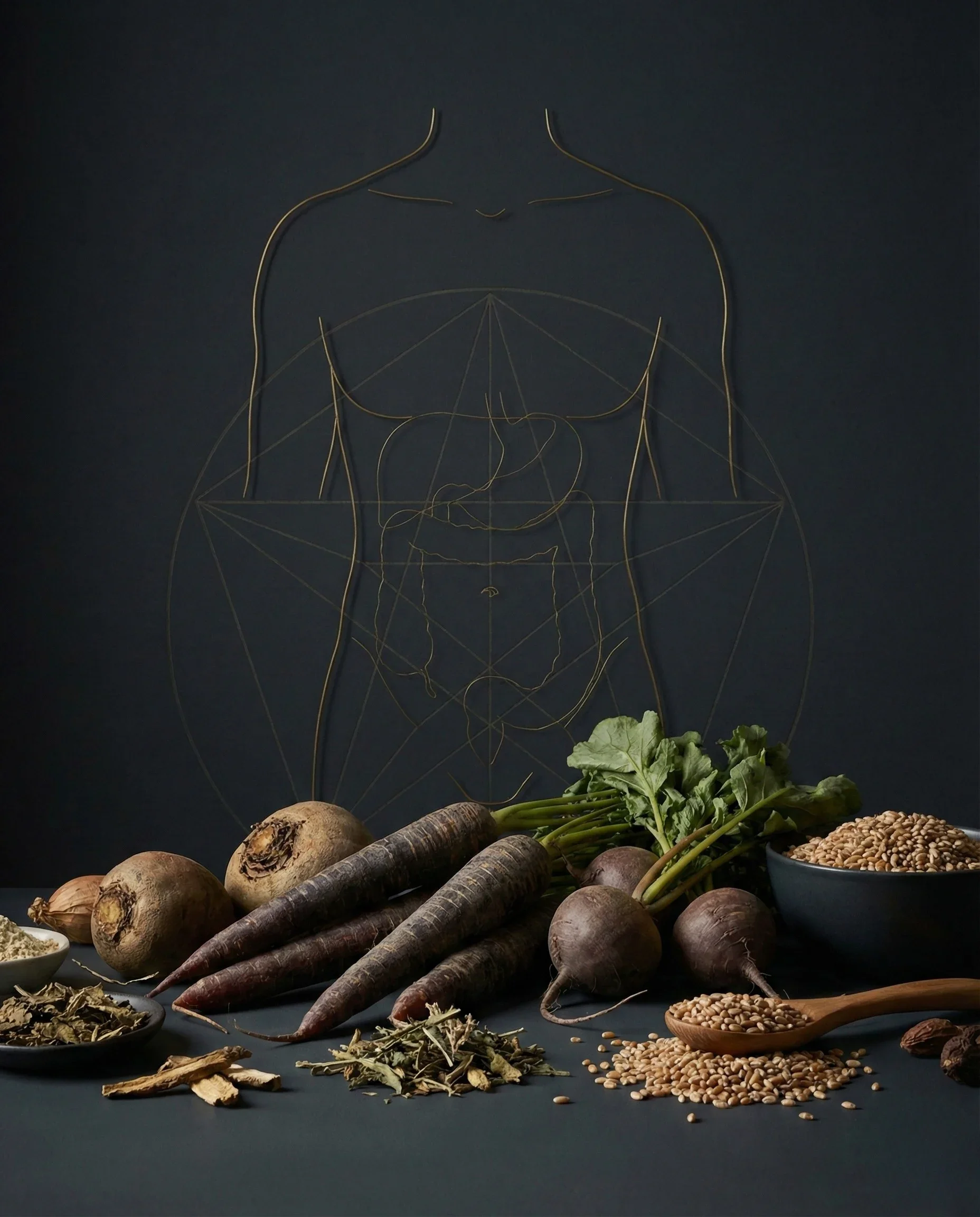
Most practitioners give the same dietary advice to every patient: avoid cold and raw, eat warm and cooked. That's not dietary therapy — that's a pamphlet. This course teaches you to apply the complete theoretical framework of Chinese medicine to food — temperature, flavor, organ affinity, and depth — and construct dietary recommendations with the same logic you use to build an herbal formula. Dr. Peter Caron, DACM teaches you to prescribe food, not just discuss it.
You're Using Two of Your Three Clinical Tools. Here's the Third.
Herbal formulas work quickly and specifically. Nutrition works slowly — meal by meal, season by season. The mistake most practitioners make is treating nutrition as less precise than herbal medicine. It isn't. It uses the same flavors, the same temperatures, the same organ tropism. The difference is timescale and target depth, not theoretical rigor.
When you give a patient an herbal formula without addressing diet, you're treating the pattern while the patient's daily intake continues to reinforce it. That's why some patients seem to require herbal therapy indefinitely. The formula isn't failing — the approach is incomplete.
Chinese dietary therapy has the same internal logic as a classical formula: a Chief food aligned with the primary goal, Deputies that reinforce it, Assistants that correct for imbalance, and an Envoy that directs the whole prescription to its target. This course teaches you to construct that prescription from scratch.
"The best results come from using all three: the herbal formula, the single herb, and nutrition. We often rely only on formulas — without addressing the patient's underlying diet. That creates reliance on herbal therapy, which should be discouraged."
— Dr. Peter Caron, DACM
"Avoid cold and raw. Eat warm and cooked." That's a starting point, not a prescription. Every patient in your practice eats three meals a day. Those meals are either reinforcing or undermining your clinical work.
The theory exists — flavor, temperature, organ affinity, directional action. But no one taught you to apply it systematically to what is actually on the plate. You know the ingredients. You don't have the formula.
Six food categories. The Chief-Deputy-Assistant-Envoy model applied to meals. Specific foods analyzed with the same rigor as materia medica entries. A clinical framework you can use from the first session.
Course Curriculum
A clinical reference course grounded in the same logic that governs your herbal formulas. You will leave with a complete method for constructing dietary prescriptions — and the ability to analyze any meal through a Chinese medicine lens.
The Three Functions of Food in Chinese Medicine
Food supplements resources expended through the day, clears pathology accumulated through the day, and harmonizes the body with its environment. How nutrition differs from herbal formulas and single herbs — and why addressing only one tier produces incomplete clinical results.
Temperature, Flavor, and Organ Affinity
The five-temperature spectrum from cold to hot — and what "neutral" actually means for clinical flexibility. The five flavors and their actions: sweet builds, bitter drains, acrid moves, salty softens and directs inward, sour constricts. Organ tropism in food, using the same language as your materia medica.
Depth: Wei, Ying, and Yuan in Dietary Therapy
A classical framework applied to food selection. How to match dietary choices to the depth of the pathology — and why fruit works at the Wei level while meats and legumes reach deeper. A layer of analysis most dietary therapy courses never cover.
Food Categories and Their Clinical Properties
Fruits, Grains, Legumes, Vegetables, Meats, Nuts and Seeds, Fats, Spices. Each category's tonic or draining nature, thermal tendency, and appropriate clinical role — including why poor digestion of legumes is a diagnostically relevant sign, and why the stomach is the grandfather of all qi and blood.
Constructing a Dietary Prescription
The herbal formula model applied directly to food: Chief, Deputy, Assistant, Envoy. Full case analysis of two complete meals — sushi as a balanced prescription, poutine as an imbalanced one — with breakdown of every component's function and how to adjust for the individual patient.
Pattern-Based Dietary Recommendations
From Spleen Qi deficiency to Blood deficiency to Liver Qi stagnation — building complete dietary prescriptions for the presentations you treat every week. How to work within a patient's existing habits rather than overhauling their diet. Practical strategy for moving patients in a clinical direction without attacking the foods they're attached to.
2 NCCAOM PDA Credits. On-demand access. Learn the system once. Apply it for life.
This Course Is Built For
Practitioners Who Are Ready
Licensed Acupuncturists Who Want a Complete Clinical Toolkit
You needle precisely. You prescribe herbs precisely. Your dietary advice is still "avoid cold and raw." This course closes that gap. Dietary therapy becomes a third clinical arm — as structured and replicable as your point selection.
Licensed PractitionerStudents Building Clinical Habits Before They're Set
Most programs touch nutrition without giving you a functional system. Build this framework from the start — before the habit of vague dietary advice has time to form. The practitioners who integrate dietary therapy early spend the rest of their careers doing it well.
Student / New GraduateHerb-Focused Practitioners Reducing Formula Dependency
If your patients seem to need herbal therapy indefinitely, look at what they're eating. Dietary therapy closes the loop between sessions — addressing the pattern at the level of daily life, not just clinical intervention. A well-constructed dietary prescription reduces reliance on formulas by design.
Herbal PractitionerYou want a handout to give patients. This course builds a clinical reasoning system. You will leave with a framework you use in the treatment room — not a list of approved foods.
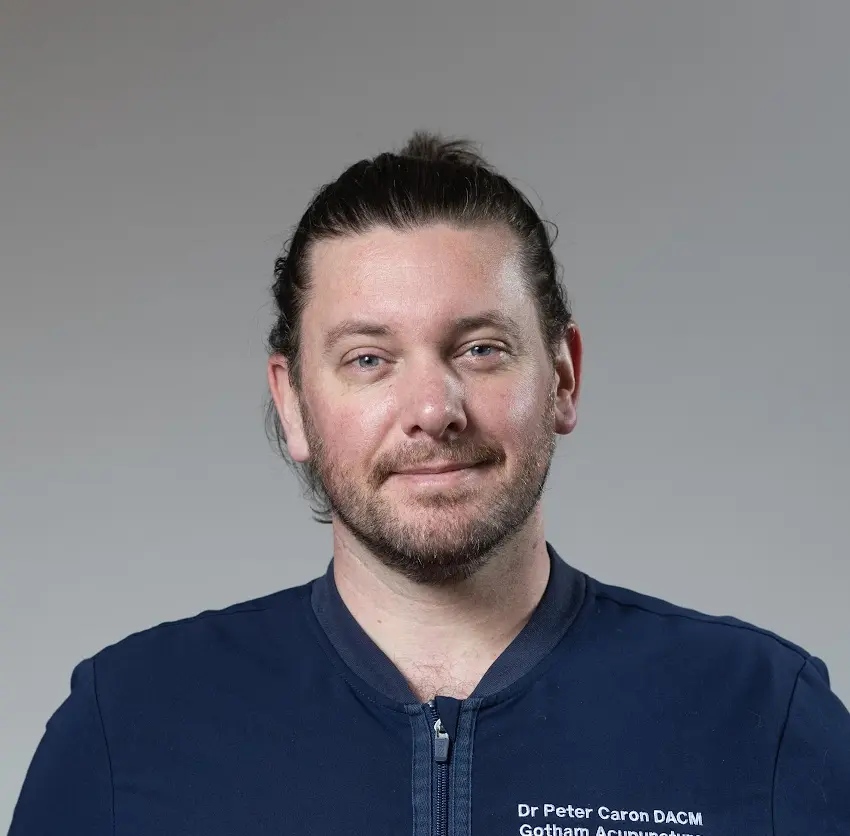
Dr. Peter Caron, DACM
Founder: Orthopedics & Practice StrategyDr. Caron founded AAG to enable senior practitioners to easily and effectively share their wisdom with the next generation. His career has been defined by a refusal to accept the soft standards of the wellness industry. From the high-volume clinics of rural Guatemala to the competitive landscape of New York City, his focus is singular: does it work?
With over 20,000 patient treatments performed globally, Dr. Caron represents the intersection of high-volume clinical reality and deep lineage. His teaching mission is to give practitioners tools that hold up under clinical pressure — not frameworks that only work on textbook presentations.
Clinical FocusEverything You Need to Know Before You Enroll
| Credits | 2 NCCAOM PDA Points — AOM-OM category |
| Format | On-demand video — watch at your own pace, any device |
| Access | Lifetime access upon purchase — no expiration |
| Assessment | Brief clinical quiz required to earn PDA credit — retake as needed until you pass |
| Certificate | Downloadable PDA certificate issued immediately upon passing |
| Reporting | Completed credits reported promptly to the NCCAOM on your behalf |
| Provider | American Acupuncture Guild — NCCAOM Registered PDA Provider |
| Price | $50 — one-time purchase, no subscription required |
Most states accept NCCAOM PDA points toward license renewal. We recommend confirming jurisdiction-specific requirements with your state acupuncture board.
Introduction to Dietary Therapy
Taught by Dr. Peter Caron, DACM
no subscription
- On-demand video — lifetime access
- 2 NCCAOM PDA credits (AOM-OM)
- Clinical assessment quiz — retake until you pass
- Downloadable PDA certificate
- Credits reported to NCCAOM on your behalf
Instant access after purchase. Secure checkout.
NCCAOM Registered PDA Provider
More From the Guild Curriculum
Mark Kuebel, L.Ac.
Introduction to Master Tung's Acupuncture
The internal logic of the Tung system — six correspondence relationships, Dào Mǎ groupings, and the most clinically productive points from fingers to thighs.
Mark Kuebel, L.Ac.
Five Phases & Chinese Medicine
Integration of the 5 Zang, 6 Fu, and Channel System. The dynamic model that generates physiological diagnosis — essential for every classical system you'll study.
Mark Kuebel, L.Ac.
Pain Management Protocols
A rigorous channel-based approach to structural pain. Stop relying on clinical guesswork — master the systematic framework for consistent, replicable results.